Setting up a kitchen, or helping someone else set one up, usually means buying either far too little or an enormous box of things that will be stale before they are opened. Here is the list that actually gets used.
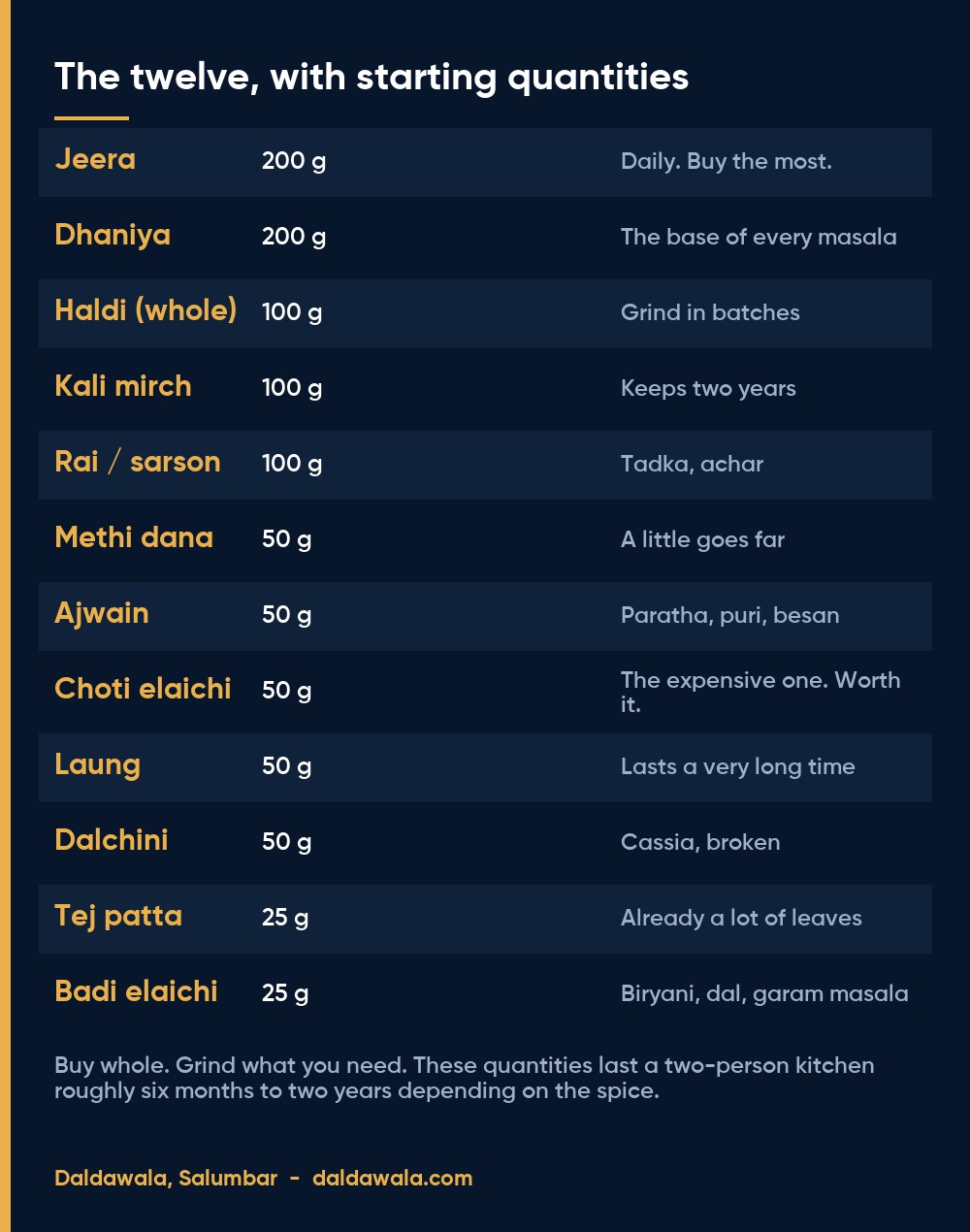
Short answer: Twelve whole spices cover nearly everything an Indian home kitchen cooks. Buy 100 g of the ones used daily and 25-50 g of the rest - a hundred grams of tej patta is several years' supply.
Where to spend and where not to
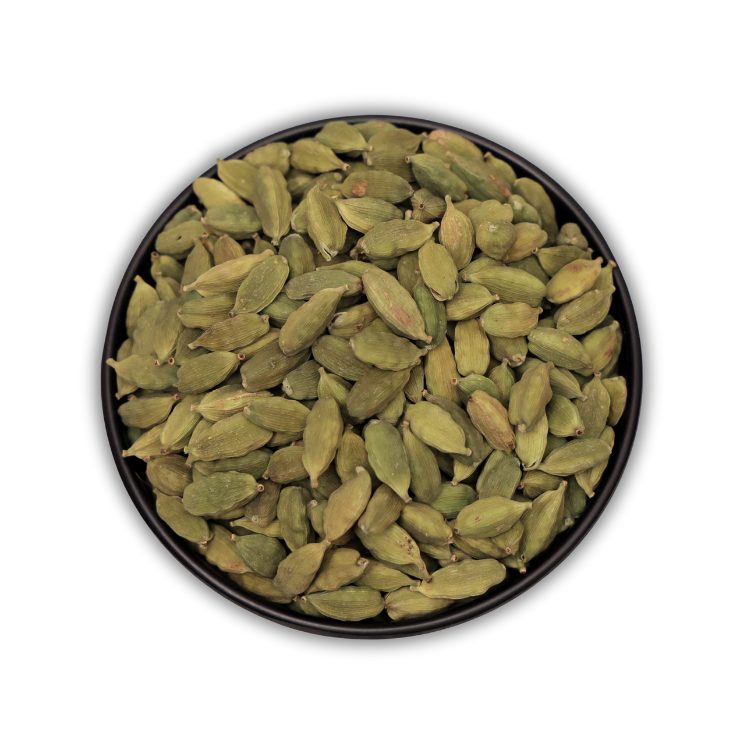
Spend on the cardamom. Green elaichi is the most expensive thing on the list and the one where cheap reliably means old. A faded, flat pod contributes almost nothing, so cheap cardamom is not cheap - it is wasted.
Do not spend on jeera, dhaniya, rai or methi. These are inexpensive, the quality gap between good and adequate is small, and you use them in quantity. Buy ordinary ones and buy plenty.
Buy haldi whole. It costs a little more and it is the only practical defence against colour adulteration in the powder, which is the one spice adulteration that is genuinely a safety issue.
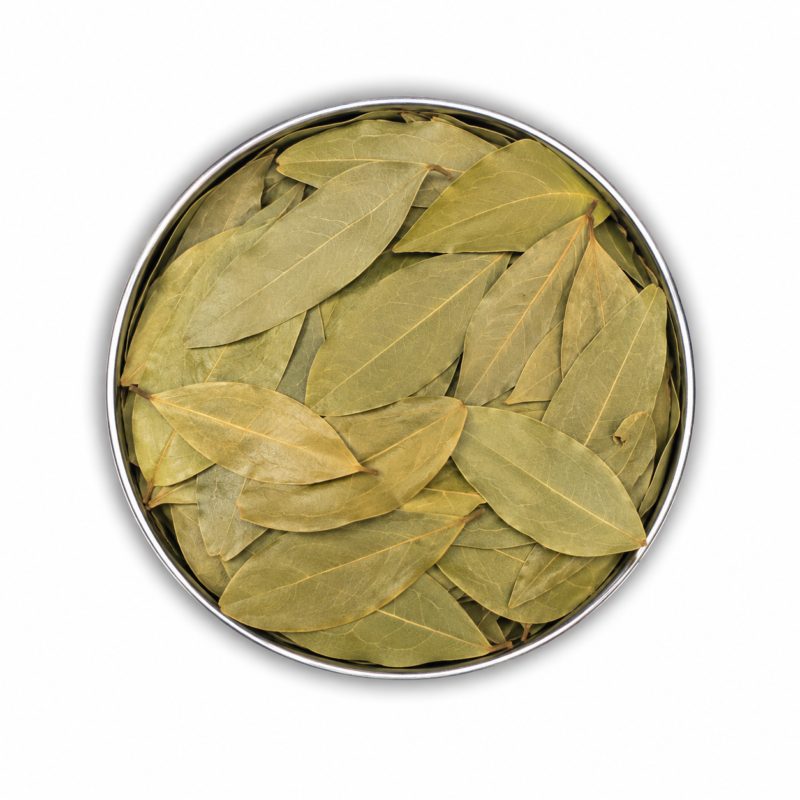
Buy tej patta and laung small. Both are extremely light or extremely potent. Twenty-five grams of tej patta is a couple of hundred leaves.
What to add next
Once the twelve are in place and being used, the sensible additions in order:
Javitri - for biryani, korma and garam masala. Small quantity.
Star anise - one pod per biryani, so fifty grams lasts years.
Shah jeera - if you make biryani often, this is the upgrade that makes the most difference.
Saunth - whole dried ginger, for chai masala and winter sweets.
Jaiphal - one nut keeps for years and grates as needed.
Kalonji - for achar, naan and panch phoron.
Beyond that you are into regional specifics - pathar phool for Maharashtrian, kokum for coastal, panch phoron for Bengali - and those should be bought when a recipe calls for them, not in advance.
What you do not need
Pre-made masala blends, at least not many. One decent garam masala is useful; a shelf of fifteen named blends is a shelf of expensive, mostly-coriander powder that will be stale in a season. Most of them can be made from the twelve above.
Ground versions of anything on the list. Grind what you need. The exception is if you genuinely cannot grind - then buy small quantities of the two or three you use most and replace them every couple of months.
A large spice rack. Open shelves in a kitchen are the worst place for spices - light and heat. A closed cupboard and a small masala dabba that you refill is better and cheaper.
Setting it up
Airtight steel or dark glass, one container per spice, kept in a cupboard away from the stove. A small masala dabba for the daily ones, refilled from the jars.
Label them, including the date you bought them. In a year's time you will not remember, and the date is what tells you whether the flat-tasting dal is the spice or the cooking.
Grind two months of powder at a time - haldi, jeera, dhaniya - and keep the rest whole. That one habit is the difference between a kitchen whose food tastes of spices and one whose food tastes of colour.
Buying it in Salumbar
Our spices is on this site with the weight and the price on every pack. Order before 5 PM and it reaches you the same day inside Salumbar, free over ₹200. We have been on Sadar Bazar since 1961. If you would rather just say what you want, send it on WhatsApp and we will confirm the price before we pack anything.
Questions people ask
What spices does a new Indian kitchen need?
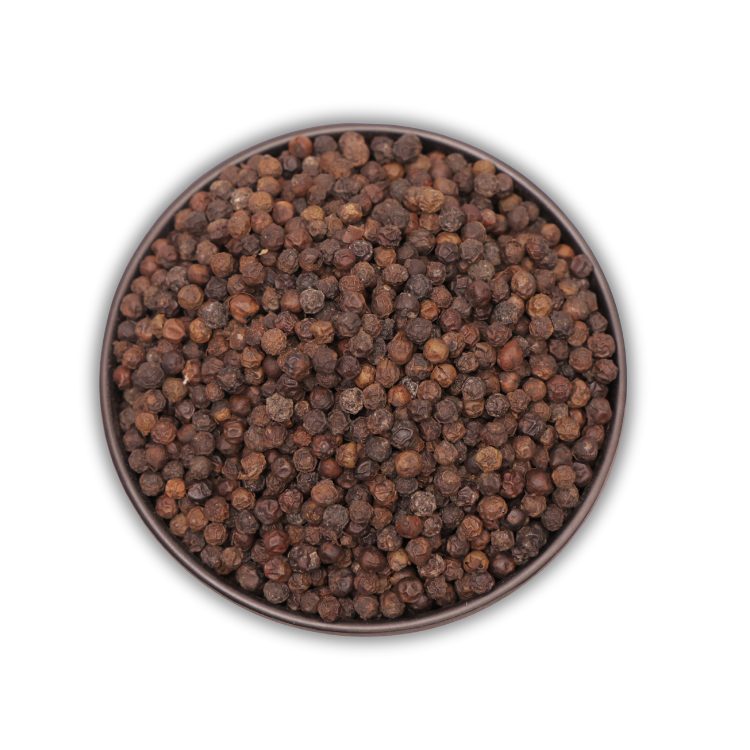
Twelve whole ones: jeera, dhaniya, haldi, kali mirch, rai, methi dana, ajwain, choti elaichi, laung, dalchini, tej patta and badi elaichi.
How much of each should I buy?
200 g each of jeera and dhaniya, 100 g of haldi, pepper and rai, 50 g of most of the rest, and 25 g of tej patta and badi elaichi.
Which spice is worth spending more on?
Green cardamom. Cheap cardamom is almost always old, and a faded pod contributes nothing - so it is not actually cheaper.
Should I buy ready-made masala blends?
One decent garam masala is useful. A shelf of fifteen named blends is mostly coriander powder that will be stale in a season, and most can be made from whole spices.
Should haldi be bought whole?
Yes if you can grind it or get it ground. It is the only practical defence against colour adulteration in turmeric powder.
Where should spices be stored?
Airtight steel or dark glass in a closed cupboard away from the stove. Open racks near the hob are the worst place, which is where most kitchens put them.
 (1).jpg)